

Be the change you want to see in the world.
– Mahatma Gandhi
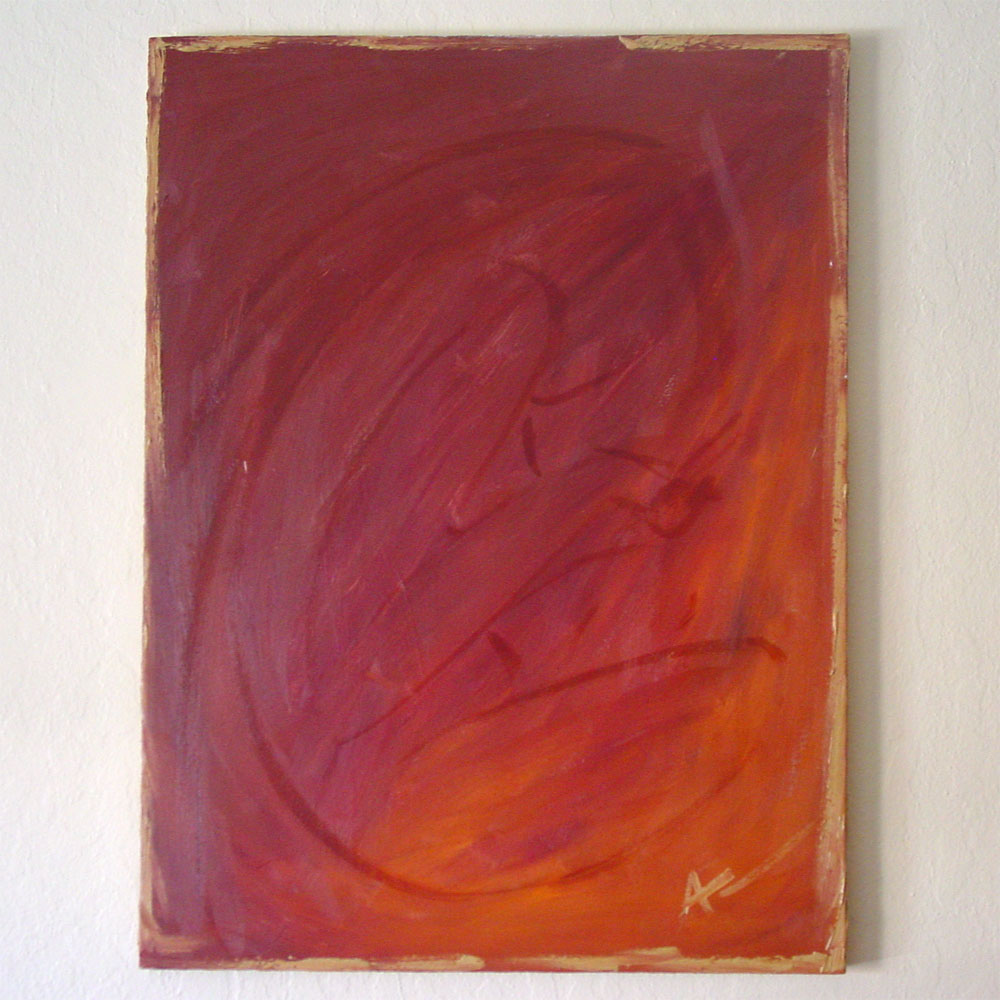
Precious by Amy CrookThe above quote fuels a dozen blog posts a day, many of them trying to rally their readers toward the writer’s pet cause. Whether it’s eco-consciousness or stamping out Twilight, most people have a cause that’s dear to their hearts. Some causes have a thousand voices crying out to champion them, others have millions, and some are important only to a handful of people, but everyone’s got something.

I don’t have a pet cause. No one I know has ever been afflicted with some terrible tragedy, and the troubles I’ve had have all been fairly ordinary and — though quite angst-ridden at the time, I’m sure — nothing I couldn’t get over without an army of people rallying to my side. I’ve never had cancer or some obscure, uncurable disease; I’ve never been assaulted or even mugged; I really don’t have the mental energy to indulge in outrage for the sake of itself when I could be using that energy to make art (or play Mouse Hunt).

So I found myself wondering, what change do I want to see?

  • I want to see more beauty where people are creating ugliness.
  • I want people to have more compassion where there is now callousness.
  • I want more kindness, instead of deliberate or thoughtless cruelty.
  • I want to see people actually respecting each other, instead of grabbing at superiority under the false label of respect.

Some of these are easier than others.

As an artist, I create things every day that, I hope, add beauty to the world. From the paintings on my walls to the work I do for clients, I try to make things which are pleasing to the eye and the soul, even while they sometimes serve another function.

Compassion is harder for me. While my cynical apathy protects me from spinning myself out into nothing trying to help every person who needs or thinks they’re in need, it also keeps a lot of things from really touching me. Every person’s pain is deeply individual, and it can be very hard to resist the urge to play a rating game — your pain is your own fault so it doesn’t count, your pain isn’t as bad as his pain, your pain is fleeting so it doesn’t deserve as much. It’s hard to figure out, too, how much or how far to be open to things — my lines right now are pretty harsh, but if I move them too far I’ll just end up raw and useless in other ways.

Kindness seems easy, but thoughtlessness trumps it a lot. Kindness requires attention, being in the present and recognizing when someone needs you to give them something, a moment or a dollar or a smile. It’s a lot easier than compassion, though, because there’s a ton of small ways to be kind, and being thoughtful and kind can even help develop compassion. Someone deserving of kindness seems to us then to be more deserving of compassion as well.

The hardest thing to remember is that everyone is deserving of kindness and compassion.

Respect is the last one, and that one’s really hard on so many levels, because so much hides under the umbrella of respect these days. So many people equate “do what I say” with “respect me” and that’s just not the case. I can totally respect you as a human and an equal, and still have my reasons for doing things my own way. What’s ironic is that when people push it, shoving their way of doing and being down your throat, they’re disrespecting you while demanding you respect them. A lot of authority figures run into this issue — they want you to respect them because of their authority, but refuse to respect those who are answerable to that authority.

It’s such a thorny issue, and it pokes into every sensitive place in our society. I’m not intending to write a whole essay here, either, though, so I’ll let what I’ve said stand.

So, there’s the things I need to work on, if I want to be the change. Beauty and kindness, compassion and respect.

What change do you want to see? How can you take a small step today to become more of what the world needs?
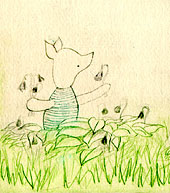
 

Piglet etching, detail, by Amy CrookI have a confession to make: right now, as of this writing, I only have seven clients. One of those clients has been working with me since I first started out as a lowly desktop publisher back in 1996. One of those clients just hired me at the end of December for a single project. One hired me back in August for a single project that’s just now finishing up, but another hired me for a single project in 1999 and has been with me ever since, so you never know.

The thing is, I never wanted to have so many clients that I needed a CRM and invoicing software just to keep track of them. My needs are, in all honesty, pretty modest — though that’s a confession for another post — and I like having a lot of free time to do whatever I like, whether it’s play Facebook games or participate in NaNoWriMo, make art or read books. It’s that quiet time that gives me the energy and space to incubate my client projects and create something unique, or at least as good as I can manage, for every project.

This small list of clients means that when someone asks to have something changed today, pretty please, I can usually accommodate them. It means I can send out handmade holiday cards, and write something thoughtful and sincere in each one. It means every one of my clients is a person to me, and many of them start as or become friends. It means sometimes I can take a whole day off to go visit someone in their office so we can brainstorm their next big idea together.

I do want to do a little big of expansion this year, and some of that has to do with expanding my own skills. That free time I mentioned above has helped me develop my illustration style on the side, so I can offer some new services. I read marketing blogs as much for the advice I can give to my clients when we’re building their sites as for my own business. What I aim to do is find a balance between money stress and work stress, so that each client gets the best of me, and knows that they’re on a very short list of people who can say that.

Some designers do a wonderful job putting out a site in short time, for a wide variety of clients, and I even sometimes envy them, but that’s not who I am. Every website, every logo, every cartoon requires thought and creativity, trial and error, and time to burble through the creative distillery in my brain until it comes out as refined as I can manage.

With a list the size of mine, each client gets individual attention from me, and while I’ll be the first to admit that sometimes I get tired of hand-holding, most of the time I wouldn’t have it any other way.


Custom Moleskin, interior, by Amy CrookLet’s face is, there is no one real answer to why people blog — there’s daddy bloggers and Regretsy, Copyblogger and people who post photos of their pets. Everyone’s got a different reason to start, and a different reason to keep on.

This blog is a marketing piece for me — it’s something I both enjoy doing and that comes naturally to me, but I wouldn’t blog here, about the things I do, if it didn’t help me out in my business. I do put time and effort into making sure that most of my posts offer something, even if it’s only a cute cartoon or the chance to recommend your favorite brand of face wash.

I have had other blogs in other places, but they’re for different things. I post photos of my cat licking milk off his nose, talk about my favorite books and tv shows with like-minded friends, and rant about poor grammar on the internet. Okay, I do that last one here, but it’s a lot nicer. Those blogs allow me to connect with like-minded people for fun, to share things I’ve made or seen, and to be myself (okay, even there I’m perhaps nicer than in real life, where I’m actually deeply cynical and snarky).

What brought this subject up for me is a recent spate of high-end copy writers writing posts on their blogs talking about how it’s a big sweat shop that they’re forced to generate all this content for free, and to me, that seems like they’ve lost sight of the reason why they started blogging in the first place. I’m not talking about little hobbyist bloggers, either — these are people whose blogs serve to bring them into the spheres of their potential clients and customers, so that they can sell services, consulting, ebooks and more. And yet, despite that, they’re suddenly thinking they should also be paid for their blog posts.

So I have to ask, if their blog posts were paid, then how would people find them to know they wanted to pay for the posts? Would they have to start a second string of crappier, less useful blog posts to serve as their marketing? Would they just rely on their charming Tweets and good site design to lure people into subscribing?

There’s a ton, and I mean a ton of great info available on the web for free, because people have chosen to make it that way. But the people who write the best, most informative blogs aren’t doing it entirely out of the goodness of their hearts — they’re making a living off that time, effort and expertise, somehow, some way. Leo Baubuta writes a bunch of different blogs, but also sells books and gets ad revenue. Men With Pens gives a ton of great writing advice for bloggers, copy writers, and fiction writers, but they also sell a whole suite of services. Ittybiz writes excellent marketing and life lessons that are both entertaining and full of swearing, but she’s got expensive consulting, less expensive ebooks, a membership site, and more.

And I don’t think there’s anything wrong with that.

Sony spends a ton of money on their commercials, sometimes ones that are entertaining enough they get shared on websites everywhere for free — and yet, they wouldn’t expect you to pay to watch them, because they’re getting their return another way.

I’m not saying all blogs are advertising — but this one is, and the blogs I’ve mentioned above have marketing as a part of their purpose. When I post kitten pictures on my personal blog, I don’t expect to sell anything as a result, and a ton of hobby bloggers out there are posting for love and community.

So, I’ll ask again, why do you blog?


Faucet Light from ThinkGeek
Flow is that magic place where work keeps happening smoothly and easily, and the next time I look up from what I’ve been doing it’s done and time has passed me on by.

I can get into a good state of Flow with writing, designing, and even seeming scut work like website updates, and when I do, it reminds me of why I do what I do. It’s when I can’t seem to find my way into that space that I get frustrated and behind, so this post is to remind me of the things that (sometimes) work to get things Flowing.

  • Make a cup of tea, and don’t forget to drink it.
  • Just get started.
  • Make a list of what needs to be done, and check things off as I finish them.
  • Play a game of something brain-stimulating.
  • Open one file, and do something easy.
  • Close a bunch of tabs until the browser no longer mocks me with its waiting articles.
  • Eat a piece of chocolate or two.
  • Set up all the equipment for it – open the Scrivener doc, get out the Wacom tablet, pull out some paint tubes, get out the Copic markers, take the computer to the scanner desk.
  • Put on some really embarrassingly rockin’ ’80s tunes and go clean something small, just to get the blood flowing.
  • Take a shower.
  • Move to a different spot.
  • Put up an away message on IM and tell people I’m working.
  • Pick one thing, and start.

Obviously, some of these tricks are me-specific, but some of them would work for other people. I’ve often found that, no matter how much I’m avoiding something, if I just start it then that resistance skulks away in the face of my obvious productivity.

Also, chocolate really does help.

Do you have any tricks you use to get into the Flow of things?


If dreams are like movies, then memories are films about ghosts.
-The Counting Crows

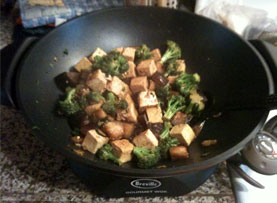
When I moved in to my most recent apartment, I bought myself a lot of really nifty small appliances — a rice cooker big enough to also be a slow cooker, a bread machine, a shiny red toaster oven that reheats pizza like a dream, a food processor. I use them to varying degrees (I have bread in the freezer right now that I baked a few days ago, but the food processor gathers dust until I need shredded carrots), but I love them all to bits.

The one thing we had when I was a kid that I didn’t buy was an electric wok. Despite being very midwestern white folk, my mom had this great big green-enameled electric wok that she used to make us stir fry this and that, usually chicken and broccoli and carrots. I don’t think she even went so far as to use soy sauce, just the usual sort of spices she used in everything else, but it was a favorite meal of mine anyway.

So, my birthday’s coming up, and usually she sends me money, which I fritter away on things like eating out and iTunes music. This time, when she asked me what I wanted, those old ghosts of meals past bobbed up and I said I wanted an electric wok. I figured, she knew what hers did back ages ago, so she’d be better at choosing one that I would.

Let me tell you, I was so right.

I got it in the mail the day before yesterday and joyfully unpacked it, having been warned to expect a box from Best Buy. It was way, way snazzier than I remember.

It’s huge, for one thing — as big now as I remember the old one being, which means it’s probably a lot bigger, given I was 12 at the time. It’s sturdy and well-built and I can even wash everything but the detachable cord, so I can’t accidentally ruin it with misplaced suds.

Yesterday was our local farmer’s market so I loaded up on veggies and locally made curried tofu, and tonight (because after all that veggie shopping, pancakes were required last night… okay, and time for the wok parts to dry thoroughly) I finally broke it out. One cubed eggplant. One big bundle of rough-chopped broccoli. Some random things from cupboards for spicing and cooking (chicken stock ice cubes, oil, soy sauce, more curry, etc), and some chopped garlic & cilantro, and we were in business.

It’s nothing at all like my mother ever made, but it makes me remember helping in the kitchen and being happy with what was for dinner, and I love this first, haunted meal from my new toy.

Thanks, Mom!


photo by tiny_white_lightsOn the face of it, dyeing one’s hair (especially as much hair as I have) is frivolous and vain, and an utter waste of money.
But dyeing my hair is a little like sprucing up my website — people who’d grown accustomed to one thing sit up and take notice again. Random strangers smiled at me on the street, and I realized I was smiling first. People I barely knew stopped me to compliment me on the new look.

Then I took it up a notch, and added nail polish. I love the way painted nails look, even though they chip pretty much instantaneously for me, I love to see them tapping away at keyboards and doing the most mundane of tasks.

In the end, all this vanity has given me something I needed a dose of — confidence.

Marketing materials can be the same way. If you love your business cards, if you’re thrilled with your website, then you’ll hand people your card with a big grin and say, “visit my site!” That confidence shows, and your prospect is excited to see whatever it is you’re so proud of. But if you don’t like what you’ve got, then you’ll be apologetic or reluctant, and that sends a message to the potential clients or customers that even you aren’t confident in your product or service.

So, next time you find yourself hesitating as you hand over your card, ask yourself — is it time for a marketing material makeover?


This has been a week of meeting upon meeting, with things shifting under me like quicksand and throwing my schedule into constant, exhausting disarray. Early in the week I was still keeping to-do lists, wanting to get the everyday things done despite the energy demands of putting an introvert out into the world every day this week, but those fell by the wayside around Wednesday and I haven’t picked them back up — yet.

I finally realized that when I consider a meeting to be one item on a to-do list, I’m asking too much of myself. “Go out” is one thing, while “meet with another person or people” is a whole different expenditure of energy and willpower.

So, halfway through the week, I met myself halfway — I only did the necessary chores (mostly cat-related), I let things go that could be let go, and I concentrated on keeping my footing. I got through cancellations, reschedules, demanding social contact, and a cat who climbed on me every time I came home with the intention of never letting me leave the house again.

Coming to the end of the week with more meetings waiting, I rather want to let him have his way. But instead I’ll muster up my last dregs of energy and get myself ready for another day of maddening meetings, social demands, and not expecting the dishes to get done on top of it.

Having given myself that slack, I’m coming up on the weekend tired but happy, instead of frustrated and overwhelmed, and that’s worth a few dirty dishes or undone to-do items.


I’m not originating any ideas here — Ittybiz, Copyblogger, Problogger, Fluent Self and a dozen other blogs have gone over this ground before, and probably dozens of people before them that they learned from. But it never stops being a good idea, and it’s one that’s hard to remember when you’re in the thick of things.
When you’re writing copy to sell people something, whether it’s a product or a service or even an idea, you need three things: Features, Benefits, and a Call to Action. Between these three things, you have to answer what Naomi calls the annoying inner three-year-old question: Why?

Let’s say you have a Widget. We want people to buy this Widget, and maybe even get upsold to the Whatchamacallit package, and you’re so excited about all the features you’ve built into the widget that you want to list them out in lovingly prepared bullet points. Which is great, actually, people like easy lists, but remember:

For every Feature, you need a Benefit.

Tell me what it does, sure, but then tell me why I care. Benefits without features just sound like random bragging, but features without benefits are equally pointless. If your widget perforates to perfection, that’s great. But what does that do for me? Tell me what I can do with those perfect perforations, and how that helps me in my everyday life, and then I’ll be ready to become a Widget owner in a heartbeat.

The last thing on the page (and if it’s a long page, perhaps the third, seventh, and fifteenth) is your Call to Action.

You can sell me on the features and benefits all you want, but if you never actually try to sell me the Widget, then the sale won’t truly be made. People love to be told what the next step is, so remember to point them to it. Whether it’s a blog comment, a sale, or an inquiry for your services, make sure it’s obvious what needs to happen next. And then tell your reader to do what you want them to — or ask, if that’s more your style, though be wary of softening the call to action until it’s more like a gentle whisper.

Remember, for maximum conversion (to use marketer-speak): Pair each feature with its benefit, and end with a strong call to action.

Then you’ll be on your way to Widget Mogul status in no time.


image by johnkoetsierI’ve always had a knack for gift giving — whether it’s for clients or friends or friends-of-friends, I’ve always had that ability to walk through a store and say, “Yeah, they’d love that.” It’s kind of like my superpower, really — it’s netted me many smiles and much gratitude, and made gift-giving a joy instead of an obligation. I’ve even considered making a side business of it, but for now I just use my powers for the smaller good.
I was thinking today that the art of gift giving has a lot in common with the work of giving clients good design — you have to get to know them well enough to figure out what their real “thing” is, and then give them something that highlights it. If it’s a gift, and I know the person loves bats, then I’ll get them something bat-themed that also fits with the rest of their life, like a travel mug for a busy exec or a canvas tote bag for someone who’s going green (or just loves tote bags).

It’s a matter of listening to what they tell you, but also seeing what they show with their actions — sometimes it’s hard to get past what they think they want and down to what they really secretly expect. Like websites, for instance; often people will say that they just want “a presence, because you need that now, right?” But what they really mean is that they want to look like they’re keeping up with the trends, they want people to find them online and give them business that way without a lot of extra effort, and most of all, they want me to make them look good.

In fact, wanting to make them look good is a great motivation for gift-giving, too. After all, those canvas totes not only show off how green someone is, they can say something about their personality, too. And the travel mug can keep the coffee off the tie they got for Father’s day — assuming that’s a goal. And if I ever find earrings with little hanging bats, I know just who I’m going to give them to.


Twitter has become the latest hot thing in social networking, and social marketing. Whether people use Twitter for friends, for business, or for some combination of the two, I’ve noticed that nobody does Twitter quite like anybody else.

There are as many ways to use Twitter as there are subscribers.

Here’s the thing — in some ways I’m the classic Virgo. I like to see things complete, like collections and reading lists. It bothers me just a little bit to know I’ve got 5 out of 6 of those limited-edition widgets. Sometimes, it bothers me a lot.

So I try to dip my toes into my Twitter stream on a regular basis, without stressing too much about keeping caught up. At least, that’s the theory I work on when I add just one more interesting person from this or that referral, or consider whether to follow people back.

I also have a personal Twitter account, which I’ve actually had for a lot longer than my business one. I keep my updates protected, and since all the people I follow really are my friends, I keep up with that stream — and I remove people who tweet so much they drown out the rest of the people I want to see.

Unfortunately, even though it pains my little Virgo heart, I’m learning that I can’t keep that up with my business stream, for a couple of reasons. While some of my stream consists of people who I’m following because they tweet good info, at least some of the time, there’s also the issue of follow-backs. Not to mention spammers, scammers, and people who are just plain boring.

Following people has a cost.

On my business Twitter, just as much as the personal one, I look at every person and think, what will the cost be of following this person? Will I miss tweets from people I want to read because this person will pollute the stream? Does this person really have something to say that I want to read? Will they be butthurt if I don’t follow them? And if they are, do I care?

I’ve learned to check people out on followcost.com before I add them, but then, I also have to learn to let go. If I get up in the morning and find I have to click “more” 5 or 6 times in order to catch up to where I last checked my stream, I just… don’t. It lets me look past the number of updates per day, and look at the person, and see what nuggets of gold I might get out of adding them to my stream.

And then I try to remember that I don’t have to pick up every shiny object that goes by, and my stream will always have something new in it. I just have to check when I have time and energy to check, and otherwise, just the the stream keep burbling on by without me.

But no force on this earth will make me add someone with 42 tweets a day.